Spaces of Culture 2026: Selection Results
Eight Africa-Europe cultural relations projects across Sub-Saharan Africa selected for funding by independent jury.
The Africa-Europe Spaces of Culture 2026 call for proposals closed on 21 June 2026. The call attracted a strong response with 66 eligible applications received from 33 countries across Sub-Saharan Africa.
It is great to see so many newcomers, to see such diversity in the applications and that there is a lot of space for capacity building and further accompaniment.
Dr. Jenny Mbaye
This year’s call is the second in a series of three funding calls as part of the wider Africa-Europe Partnerships for Culture programme. With a total funding allocation of €350,000, Spaces of Culture 2026 will support a total of eight collaborative cultural projects taking place across the continent.
The selected projects are:
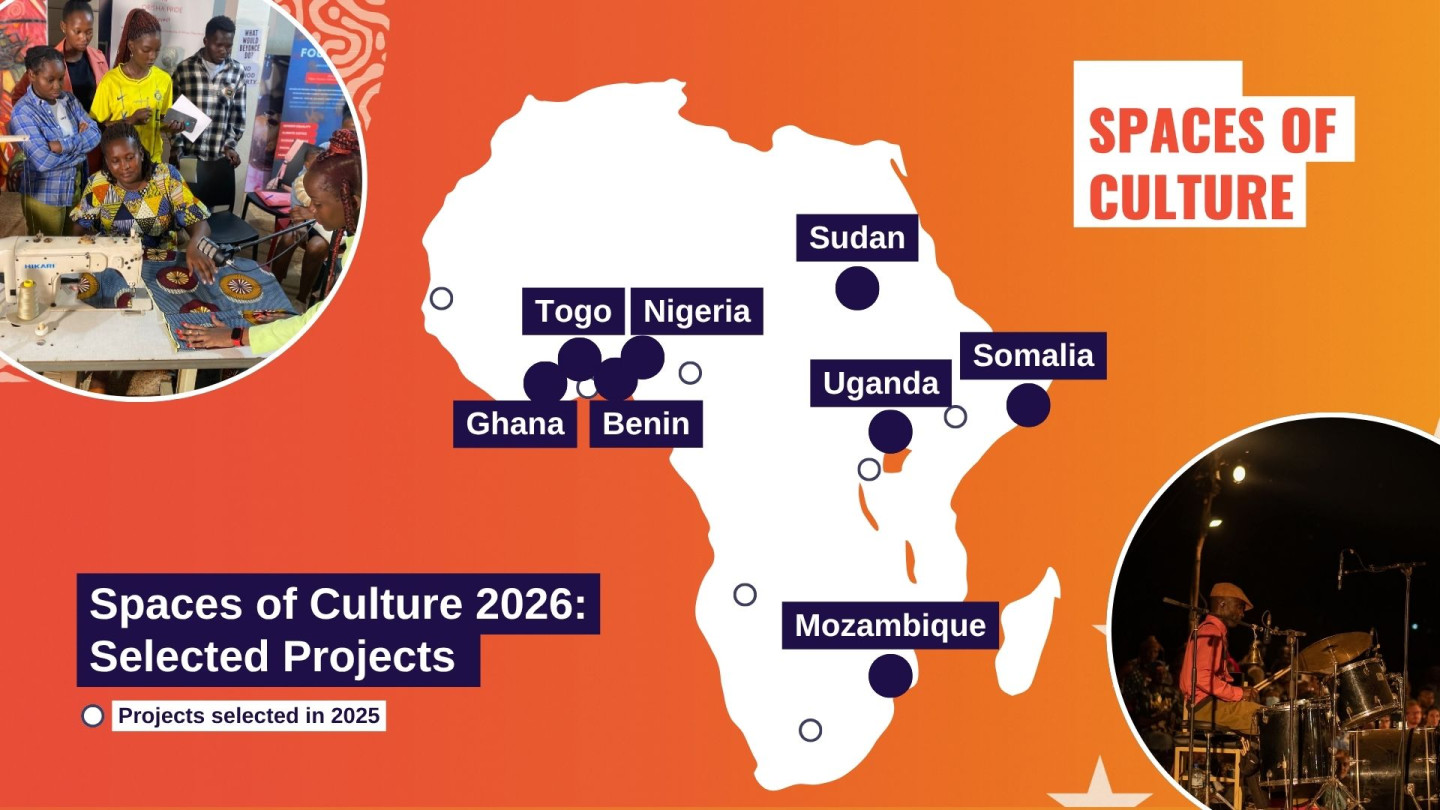
Benin – CRITICAL MOVE: Towards a Democracy of the Gaze
Ghana – Poetry as Civic Space: A Festival-Anchored Residency & Exchange Programme for African Women Poets
Mozambique – Da Zona ao Mundo – From the Neighbourhood to the World
Nigeria – SKILLustrator
Somalia – Shared Frames: Youth Film & Cultural Exchange Programme
Sudan – Unbound Sudan: Through the Culture of Animation
Togo – Ancestral Shift: Rethinking Pan-African Cultural Identity through Post-Colonial Architectural Heritage
Uganda – Weaving Futures: Africa-Europe Creative Market Connection
The selected projects will begin implementation in September 2026 and run until the end of August 2027.
This programme has the potential to reconfigure the ecosystem. People are thinking about the circulation of their works from the South to the North and creating space to understand how Europeans are part of it.
Russell Hlongwane
Independent jury selection process
The selection was carried out by an independent jury of four experts in Africa-Europe cultural relations, convened remotely by EUNIC on 15 July 2026.
The jury members brought extensive experience and expertise to the assessment process, carefully reviewing each submission and selecting the projects that would receive support.
The jury members were:
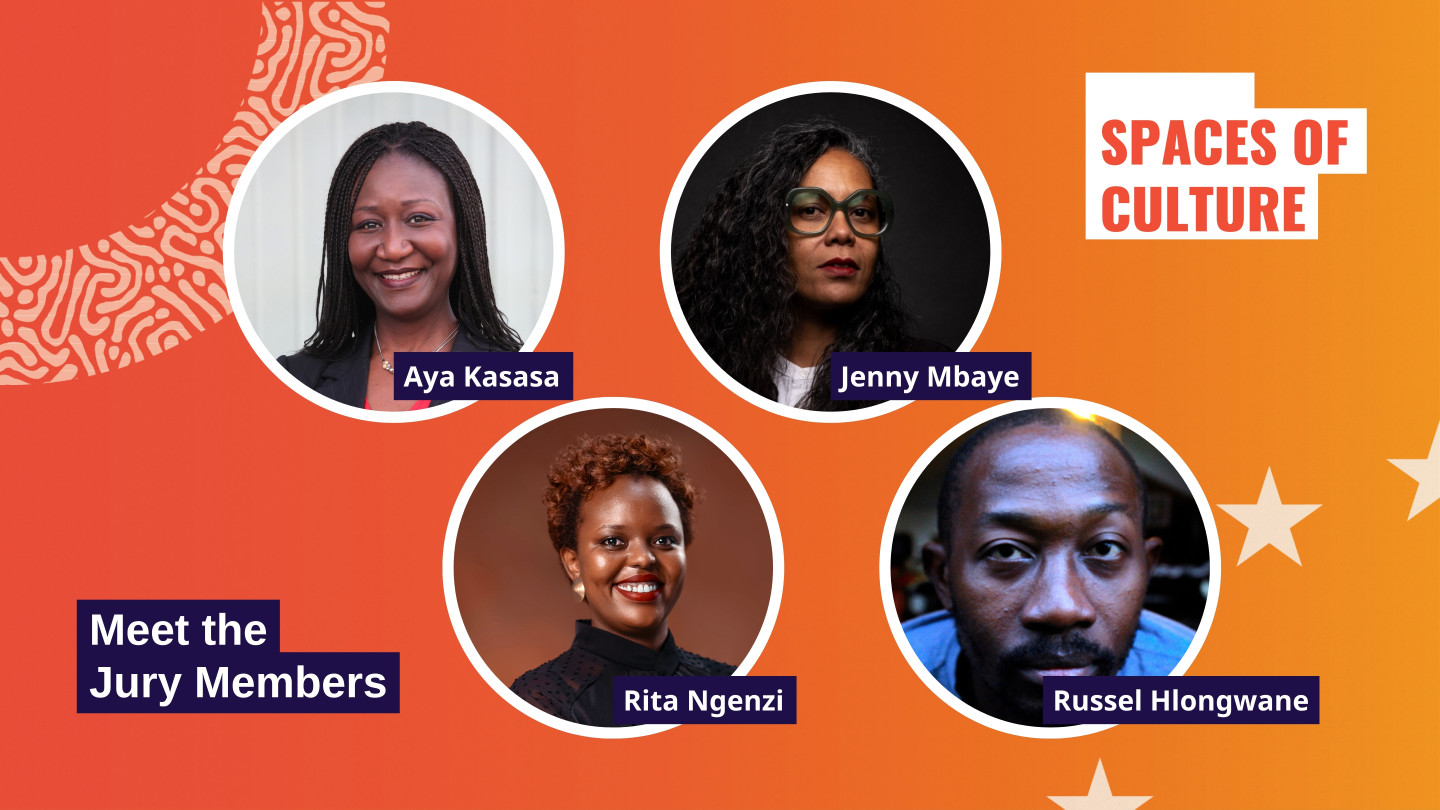
Aya Kasasa (Belgium) – Senior consultant in cultural management and policy, global cooperation and partnerships
Dr. Jenny Mbaye (Côte d’Ivoire) – Associate Professor in Culture and Creative Industries and expert in urban cultural economy and creative work
Rita Ngenzi (Uganda) – Founding Director of the Africa Creatives Alliance, innovation strategist and ecosystem builder advancing Africa’s creative economy
Russell Hlongwane (South Africa) – Cultural producer and creative industries consultant
Partnership in itself can be innovative. European partners can begin to imagine what innovation within partnership can look like, especially when the solutions are so diverse.
Rita Ngenzi
A strong and diverse selection
The selection process was highly competitive, reflecting the quality and diversity of the proposals received. All applications were assessed against a range of criteria, including: relevance to the local context, innovation, strength of partnerships, expected impact, alignment with the UN Sustainable Development Goals (SDGs), feasibility and cost-effectiveness, and environmental sustainability.
The jury highlighted the strong local ownership demonstrated throughout the applications, visible in the conceptualisation, leadership and management of the proposed projects.
I was impressed by the attention given to African realities and local needs. The applications were nuanced, included country-specific considerations and paid attention to the continent and regional dynamics.
Aya Kasasa