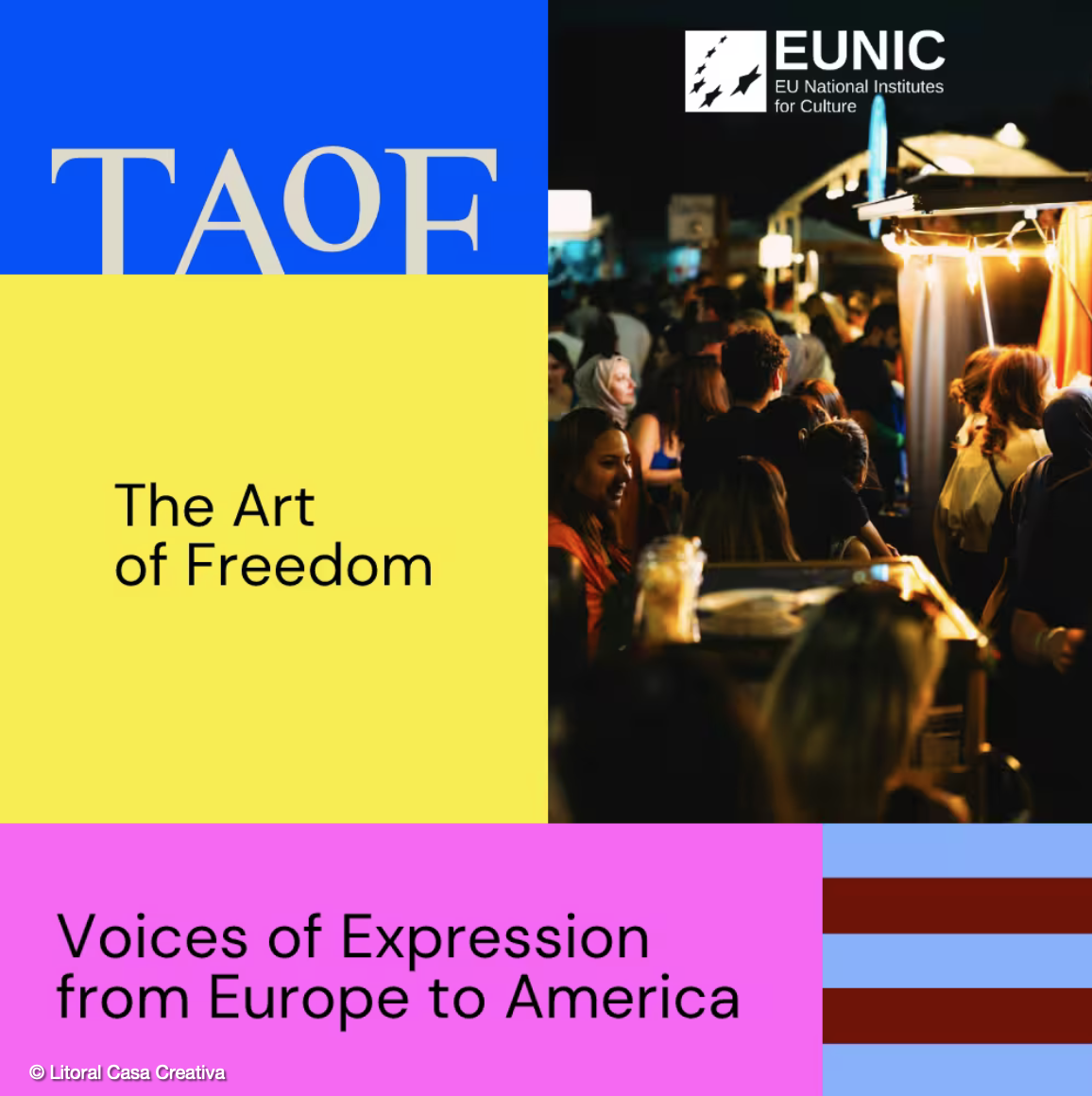
The Art of Freedom: Voices of Expression from Europe to America is a year-long platform for cultural relations that brings together European and American artists, thinkers, students, and communities to explore one of democracy’s most fundamental principles: freedom of expression.
Developed by the EUNIC Cluster in Washington, D.C., and marking the 250th anniversary of American democracy, the program provides a framework for artistic collaboration, dialogue, and shared reflection across the Atlantic. Through exhibitions, performances, debates, music, and participatory formats, the program showcases how creative expression has historically contributed to civic engagement, challenged established narratives, and opened spaces for dialogue. Spanning diverse artistic practices—from protest music to immersive theatre and multilingual storytelling—it highlights culture’s role in engaging with questions of liberty, resilience, and individual and collective agency.
Young people, cultural professionals, educators, and diverse local communities are invited to engage directly with artists and ideas, fostering curiosity, critical thinking, and a sense of shared responsibility for democratic values.
At its core, the program fosters exchange across generations, cultures, and disciplines, encouraging mutual learning and people-to-people connections. By bringing together European cultural institutes, embassies, universities, and local partners in a process of co-creation, The Art of Freedom celebrates the power of art to question, inspire, and connect in order to build more inclusive, open, and resilient societies.
Stay tuned for more information coming soon!