Reflection on almost two decades of European collaboration through the EUNIC network
We hear from Olaf Gerlach-Hansen on how cultural relations, European collaboration, and the topics shaping EUNIC’s work have evolved over time.
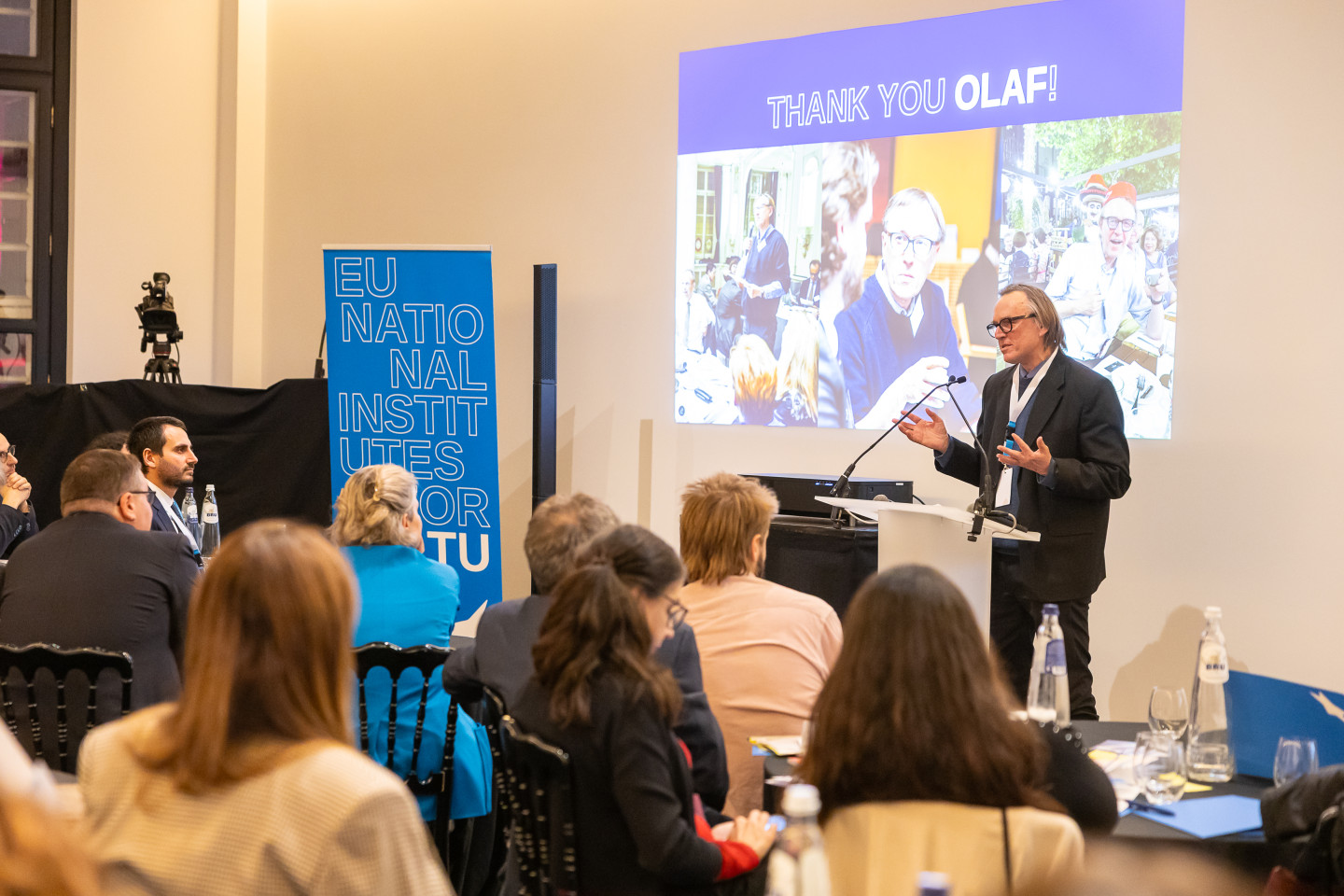
Olaf Gerlach-Hansen is Senior Advisor for Strategic Development at the Danish Cultural Institute and has been responsible for collaboration with the EUNIC network since 2009.
He has followed EUNIC’s journey from its early years and has seen the network transform dramatically over the last 17 years - from a relatively informal grouping of networks to what is today a network of 39 members with global reach and a strategic partner of the European Union.
How has the EUNIC network evolved over the years as a partner to the EU?
I joined the Danish Cultural Institute around 2008. At the time, EUNIC was newly founded and a smaller formalised peer group without staff, unlike the serious global network it is today.
The EUNIC General Assembly in 2009, held in Copenhagen, is where my EUNIC journey really began. Together with the heads of EUNIC members, we met at the European Commission’s Representation in Denmark, and we were joined by a representative from the EU’s DG EAC in Brussels. Already at that time, the future potential of EUNIC, as seen by the European Commission, was made clear - but it would take several more years before this potential was truly realised.
The General Assembly in Madrid in 2015 felt like a genuine turning point. For the first time, we discussed collectively as a network with EU representatives from DG EAC and the European External Action Service (EEAS), which was mandated to develop a framework proposal for the EU’s external cultural relations.
At the time, there were differing opinions about what close cooperation with the EU might look like, and about the distinction between cultural relations and cultural diplomacy.
EUNIC members opted for a cultural relations approach and signed a partnership agreement with the EEAS and DG EAC, in which the three parties agreed to initiate joint pilot activities to enhance cooperation between EU Delegations and EUNIC clusters.
This resulted in the 2016 communication, Towards an EU Strategy for International Cultural Relations, which identified EUNIC as one of the implementing partners of the EU’s cultural relations approach. This marked the real start of EUNIC as a strategic partner of the EU.
What does it mean to be part of the EUNIC network today?
For me, the EUNIC network today means:
Access to a global network:
EUNIC members have vast individual networks, and together through clusters we gain access to expertise and contacts that help us become operational.
A cultural relations approach with local partners:
EUNIC clusters connect European partners at home with local partners and actors around the world, providing a pathway to building new cultural relations.
Policy access and influence:
As a strategic partner of the EU, EUNIC has strong links to the European institutions, and as a network we have a unified voice on important advocacy issues.
The ethos of EUNIC today is one of mutual respect, non-judgement, and diversity - in terms of gender and age, but also institutional set-ups and global presence.
The network opened up to a wider range of member organisations, including governmental bodies and ministries. In my experience, this has been positive, bringing a broader range of perspectives into the network.
What are some key cultural relations topics you have followed, and how have they evolved?
Africa-Europe cultural relations:
I have worked with all regions of the world, but mainly Africa - from Morocco, Burkina Faso and Kenya, to South Africa - connecting European and African partners working with intercultural exchange programmes.
Today, the Danish Cultural Institute seeks to build stronger ties with Africa, drawing heavily on cooperation with EUNIC clusters on the continent.
EUNIC now has a strong presence in Africa, with many clusters and member organisations present even in countries where clusters do not yet exist.
Culture and development:
I was Director of the Danish Centre for Culture and Development, which worked to transform cultural relations between Denmark and partners in Africa, Latin America, and Asia - moving from ad hoc projects to bilateral culture and development programmes.
Culture and development can be understood as mutual cooperation in the fields of arts, culture and creative industries, with long-term cultural and societal development as the goal. However, mutuality can always be questioned when funding and grant-writing mainly come from one side.
A positive development today is that many strong local civil society and cultural partners have emerged in many so-called “developing” countries.
Culture, climate and the environment:
I have followed this topic closely since 2007, when I was invited to China for a British–US–China summit of high-level decision-makers and experts focusing on climate and environment. Here, culture and cultural relations emerged as one of the main solutions to enable broad change.
At the Climate COP 2009 in Copenhagen, this led to a three-year programme involving the Danish Cultural Institute and several major EUNIC members. Ever since, the topic or climate and cultural relations has been one of my main interests and remains a key area for EUNIC and its members.